Venezuela Ship Agency Guide — What You Need to Know Before Your First Port Call
Practical guide to first-time tanker port calls in Venezuela covering local agents, documentation, workflow, port charges, and common pitfalls.
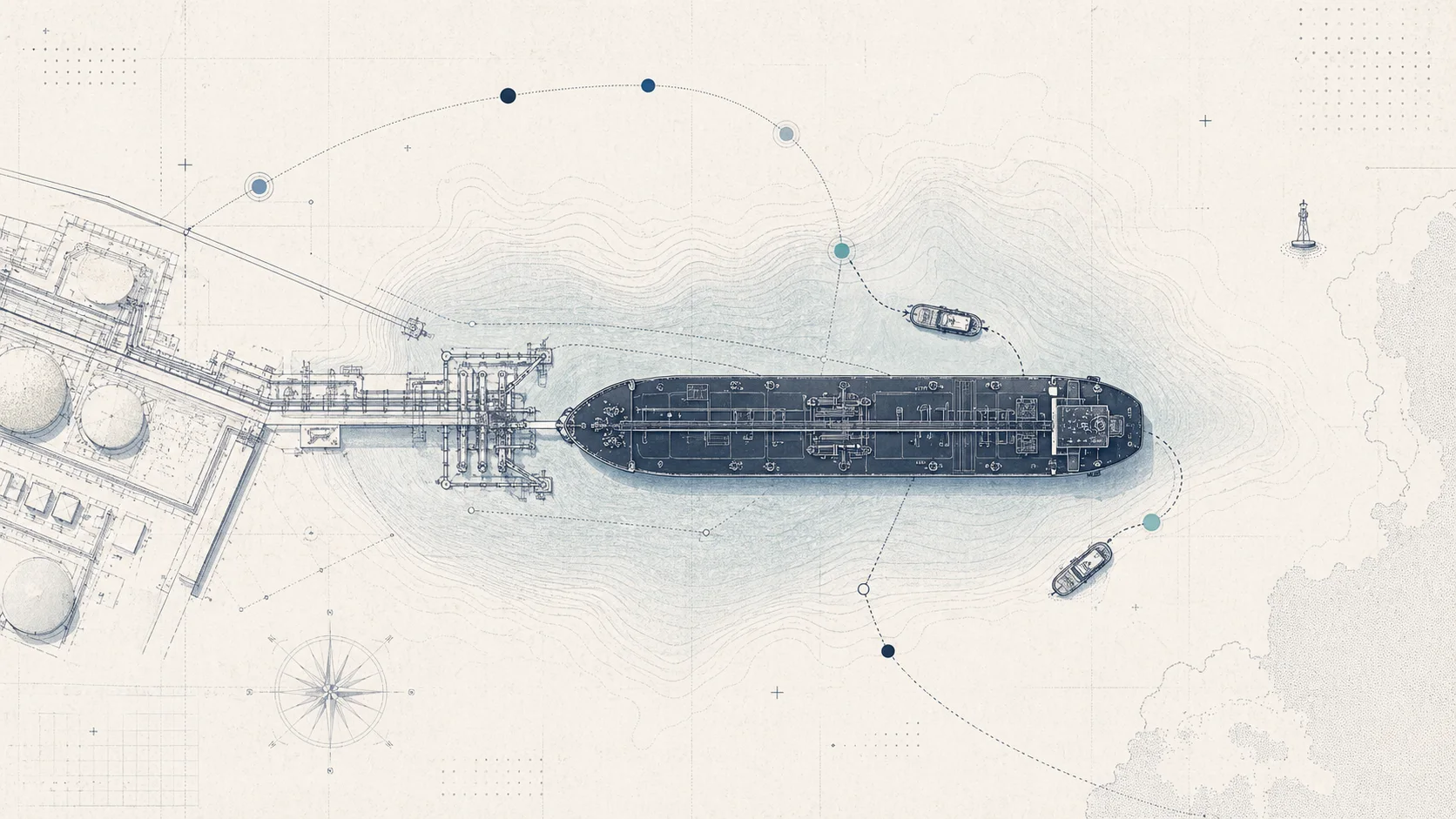
A practical guide for a first tanker call at a Venezuelan oil terminal. It covers local agents, documentation, the port-call workflow, port charges, and the mistakes that most often turn into delay and extra cost.
Scope
This guide is for tanker and oil-terminal calls in , especially ports such as Jose Terminal, Puerto La Cruz, and Maracaibo Port. It is meant for owners, charterers, operators, and first-time principals preparing a call. It is not a substitute for legal advice or a guide to every vessel class and every Venezuelan port.
Why You Need a Local Agent
Venezuela is not a port where you can operate without a licensed local agent. This is not a recommendation — it is a legal requirement and a practical necessity.
INEA licensing: Every ship agent operating in Venezuela must hold a valid license from INEA (Instituto Nacional de Espacios Acuáticos), the country's maritime authority. INEA controls port captain offices, pilotage, vessel registration, and the agent licensing regime. An unlicensed entity cannot clear a vessel inward or outward at any Venezuelan port. No Libre Plática, no Zarpe, no operations.
Paper-based bureaucracy: Venezuelan port clearance involves simultaneous interaction with INEA, SENIAT (customs/tax), SAIME (immigration), and MPPS (health authority). Nearly all of this is still paper-based — physical stamps, wet signatures, multiple copies of documents in Spanish, and in-person visits to government offices. There is no foreign-accessible digital portal that replaces this.
PDVSA relationship: At oil terminals like Jose Terminal, Puerto La Cruz, and Maracaibo Port, the terminal operator is or a PDVSA subsidiary. Loading nominations, berth assignments, and cargo scheduling flow through PDVSA's operational hierarchy. An agent with established PDVSA relationships can navigate this; one without them cannot.
Voyage documentation burden: Beyond port paperwork, many calls also require counterparty screening, insurer notifications, and voyage-specific supporting documents. An agent that cannot coordinate those workstreams will slow the call and create avoidable friction.
First-Call Checklist
Before your first Venezuelan call, make sure you have the following in place:
- A licensed local agent for the exact port and terminal you are calling
- Vessel particulars, ETA, draft, cargo details, and crew list sent early to the agent
- PDA issued, approved, and funded on a realistic timeline
- Spanish-language versions or translations of required operating documents
- A clear reporting cadence with the agent during waiting, berthing, loading, and departure
- A decision on whether the call will involve crew changes, repairs, bunkers, or launch services
- Alignment with your insurer, bank, and internal legal or compliance team on any voyage-specific documentation requirements
The Port Call Walkthrough
A standard tanker call at a Venezuelan oil terminal follows a three-phase workflow. Knowing the sequence makes it easier to plan time, cash, and expectations before the vessel arrives.
Phase 1: Pre-Arrival (72-24h before arrival)
- Nomination and appointment: Charterer or owner nominates the agent. The agent confirms and issues a Proforma Disbursement Account (PDA). PDA approval and advance funding usually need to be in place before arrival.
- INEA notification: Submit the 72-hour pre-arrival notice with vessel particulars, crew list, and cargo details. First-time callers may need provisional registration support. All documents should be ready in Spanish.
- SENIAT filing: Prepare import or export declarations through SIDUNEA/ASYCUDA World, with physical backup documents where required.
- Immigration and health paperwork: Crew list, passport details, Maritime Declaration of Health, vaccination records, and deratting certificate should be ready before boarding.
- Commercial and insurance documents: Any voyage-specific screening, insurer notices, or supporting files should be gathered before arrival rather than chased during the call.
Phase 2: Arrival and Port Operations
- Inward clearance: The agent boards the vessel and presents documents to the Port Captain (INEA), SENIAT, SAIME, and MPPS. The vessel receives Libre Plática before operations can begin. In practice, this can take 4-12 hours depending on document quality and authority availability.
- Cargo operations: Loading is supervised by the PDVSA terminal operator. The agent coordinates the Bill of Lading, cargo surveyor, manifest documentation, and operational liaison with the terminal.
- During stay: This is when weak agency support becomes obvious. Crew changes, provisions, repairs, bunker coordination, and day-to-day terminal communication all sit with the local agent.
Phase 3: Departure and Final Disbursement
- Outward clearance: SENIAT export clearance, Port Captain sign-off, immigration, and health clearance all need to be completed before departure.
- Zarpe: Without the Zarpe, the vessel cannot legally sail. Start this process 12-24 hours before planned departure, not at the last minute.
- FDA reconciliation: After sailing, the agent compiles the Final Disbursement Account with supporting invoices and reconciles it against the PDA.
The usual failure points are late PDA funding, missing Spanish documentation, and outward-clearance preparation that starts too late.
Port Charges: What to Expect
Venezuelan port costs are administered by multiple entities and denominated in various fee schedules. Local charges are officially in Bolívar Soberano, but agents bill internationally in USD.
Approximate cost components for an Aframax tanker call:
| Charge | Approximate Range (USD) |
|---|---|
| Port dues (tonnage-based) | $3,000-$8,000 |
| Pilotage (inward + outward) | $6,000-$16,000 |
| Tug hire (2-3 tugs, per movement) | $10,000-$30,000 |
| Mooring/unmooring | $2,000-$5,000 |
| Berth charges | $3,000-$10,000 |
| Agency fee | $5,000-$15,000 |
| INEA clearance | $1,000-$3,000 |
| SENIAT customs | $500-$2,000 |
| Immigration | $500-$1,500 |
| Health clearance | $300-$800 |
| Launch/boat hire | $1,000-$4,000 |
| Communications/sundries | $500-$1,500 |
| Estimated total | $40,000-$80,000 |
Excludes demurrage, bunkers, and cargo-related costs.
FX risk: The agent's conversion rate from USD to Bolívar Soberano is a real cost variable. Venezuela's parallel exchange rate fluctuates, and the spread between official and market rates affects actual disbursements. Discuss the FX methodology with your agent upfront.
Advance funding: Most Venezuelan agents require 50–75% of the PDA funded in advance. International wire transfers to Venezuela can be slow and subject to banking controls. Plan for at least 5–7 business days for fund transfers.
Common Pitfalls
1. Underestimating Wait Times
Principals accustomed to 1–2 day port calls elsewhere are often shocked by Jose Terminal's 7–14 day average wait. This is not an anomaly — it is the normal operating tempo. Build wait time into your voyage economics from the start. At current Aframax demurrage rates ($25,000–40,000/day), a 7-day wait adds $175,000–280,000 to the port call cost.
2. English-Only Documentation
Every document submitted to Venezuelan authorities must be in Spanish. Crew lists, cargo manifests, health declarations, customs filings — all of it. English-only submissions are rejected, not translated. Prepare bilingual documentation in advance.
3. Incomplete Voyage Documentation
4. P&I Club Notification Too Late
Some P&I clubs require advance notice before a Venezuelan port call. Notifying the club after fixture — or worse, after arrival — can result in delays, extra questions, or coverage qualifications. Engage your club before fixture confirmation.
5. Assuming Digital Processes Exist
Despite the SIDUNEA/ASYCUDA electronic customs system, the vast majority of port operations in Venezuela remain paper-based. There is no digital one-stop-shop. Budget for the time and effort of physical document processing across multiple agencies. This is the reality, not a temporary condition.
6. Crew Change Complications
Venezuelan visa requirements are strict and processing times are long. Crew changes at Venezuelan ports require advance visa arrangements through Venezuelan consulates — a process that can take weeks. Do not plan crew changes at a Venezuelan port without significant lead time. If unavoidable, coordinate with your agent well in advance.
7. Missing the Zarpe
The departure clearance (Zarpe) requires sign-off from SENIAT, INEA, SAIME, and MPPS. Starting this process at the last minute leads to delayed departures. Some authorities have limited office hours. An experienced agent begins the outward clearance process 12–24 hours before planned departure.
8. Ignoring AIS Requirements
P&I clubs and commercial counterparties increasingly monitor AIS continuity. Unexplained gaps in AIS transmission during a Venezuelan voyage can trigger coverage review and raise documentation questions. Ensure continuous AIS transmission throughout the voyage, including while at anchor.
What to Look for in a Venezuelan Agent
The Venezuelan agency market is thin, and first-time callers often underestimate how much the local agent shapes the whole call. When selecting an agent, look for:
- Valid INEA license (non-negotiable)
- PDVSA terminal relationships (for oil terminal calls)
- Transparent PDA/FDA process with supporting documentation
- Spanish-language documentation capability
- Communication reliability (Venezuelan internet infrastructure is inconsistent)
- Proven track record at the specific port you're calling
Summary
For a first Venezuelan call, five things matter most: appoint the right local agent, fund the PDA early, prepare Spanish-language documentation, build realistic waiting time into the voyage economics, and start departure clearance before the vessel is ready to sail.
Get those right and the call is manageable. Miss them and the costs start climbing quickly.
Maintained by nextgen. For ship agency support or intelligence on Venezuelan port operations, contact us. Last updated: March 2026.