#003 — Commercial Normalization Overtakes Political Normalization
India is now replacing China, Chevron's Pascagoula refinery is processing Venezuelan crude again, and the latest signal is no longer just IOC interest. The trade is executing.
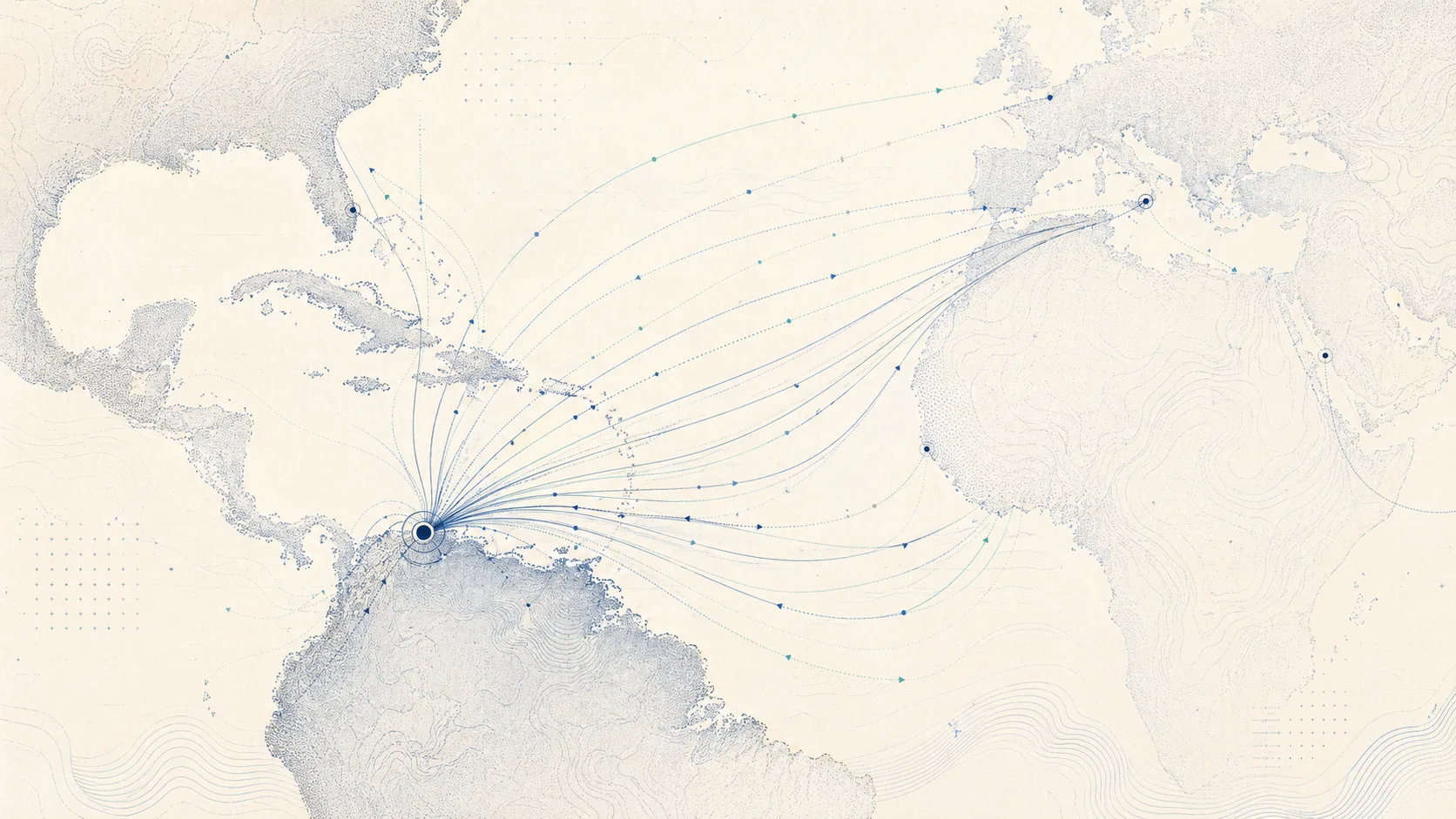
This week's read: argued that US Gulf Coast heavy-crude demand was reopening faster than competing suppliers could replace lost barrels. showed the IOC response. This week adds the next layer: the commercial system is now executing. India is replacing China as the lead buyer, Jose Terminal remains the key loading node, and 's Pascagoula Refinery is processing Venezuelan crude again.
That is a stronger signal than another diplomatic headline. It means the reopening is moving from positioning to throughput.
Situation: The Reopening Is No Longer Just a Story About Optionality
The commercial read across the last ten days is coherent:
- 's March exports pushed above 1.09M bpd.
- India displaced China as the primary buyer for Venezuelan crude.
- 's US refining system resumed visible Venezuelan crude intake through Pascagoula Refinery.
- kept broadening the gas-side option set with additional Mariscal Sucre talks.
This matters because it resolves the main ambiguity that was still open after . The question then was whether the IOC scramble was still mostly anticipatory. The answer now is no. The trade lanes, refining lanes, and buyer mix are starting to reorganize in public.
Continuity Check: Why This Is the Natural Sequel to Briefs #001 and #002
The core thesis was that USGC heavy-crude demand was reopening faster than other suppliers could fill the gap, leaving Jose as the likely operating constraint.
The majors started repositioning around that demand gap. The question shifted from whether demand existed to who would move first on the supply side.
India replaced China as the main buyer, March exports cleared 1M bpd, Delcy Rodríguez came off the SDN list, and Shell advanced additional gas-block talks.
Chevron's Pascagoula refinery was confirmed processing Venezuelan crude again, turning the reopening into a visible Atlantic-system flow rather than an abstract policy expectation.
This sequence is internally coherent. The first brief was about demand. The second was about operator behavior. The third is about execution risk declining just enough for the flows themselves to become visible.
Key Facts: The Commercial Stack Tightened This Week
| Signal | Date | What Changed | Why It Matters |
|---|---|---|---|
| India buyer shift | Apr 1-8 | India replaced China as the lead buyer of Venezuelan crude; Reliance-linked demand and broader Indian intake widened the Atlantic-Asia outlet. | The demand thesis now has a named replacement market, not just a generic export rebound. |
| March export closeout | Apr 2 | March exports cleared 1.09M bpd, the highest run-rate in roughly six years. | This is large enough to matter operationally, not just rhetorically. |
| Selective sanctions softening | Apr 1 | Delcy Rodríguez was removed from the OFAC SDN list while the broader compliance perimeter stayed conditional. | The lane is opening, but it is opening selectively rather than cleanly. |
| gas expansion | Apr 1 | Additional Mariscal Sucre discussions widened the offshore gas option set beyond the earlier Dragon logic. | The reopening is broadening beyond one crude-only story. |
| refining pull-through | Apr 8 | Pascagoula Refinery was confirmed processing a 400 kbbl Venezuelan crude cargo. | This is the cleanest proof that the reopening is flowing into the US refining system, not just staying in storage or paper deals. |
The common thread is simple: each signal reduces one more layer of friction between barrel, buyer, and refinery.
Maritime Backing: The Port System Is Still Carrying the Thesis
The commercial story would be weaker if the vessel layer had gone quiet. It did not.
The active vessel briefs in the last cycle show throughput increases versus baseline at:
| Terminal | Latest Read | Why It Matters |
|---|---|---|
| Jose Terminal | Throughput increased versus baseline | Jose remains the main loading signal for export execution and congestion risk. |
| Puerto La Cruz | Throughput increased versus baseline | The system is not relying on one terminal alone. |
| Cardon | Throughput increased versus baseline | Western-side activity confirms broader operating breadth. |
| Amuay | Throughput increased versus baseline | Refining/export infrastructure remains active despite macro noise. |
That is important because the weekly read is not "one refinery resumed" or "one buyer returned." The stronger read is that the barrel movement is being backed by a still-active port system, even while the geopolitical tape around Iran and Hormuz is turning noisier than the Venezuela tape itself.
Analysis: Commercial Normalization Is Now Outrunning the Diplomatic Clock
There are two ways to read the same week.
The political reading says the opening is still fragile:
- OFAC guidance is more conditional, not less.
- The broader US-Venezuela settlement is incomplete.
- Gulf risk did not disappear; it merely cooled after the April 8 ceasefire window.
The commercial reading is more useful:
- Buyers are already reallocating.
- Refiners are already processing.
- Operators are already widening their option set.
- is already moving enough crude for the maritime signal to stay visible.
That is why this week feels like a continuation rather than a break. The market did not wait for a clean political settlement. It started repricing the usable lanes first.
What This Changes for the Next Brief
If Brief #001 was about the gap and Brief #002 was about the scramble, Brief #003 changes the forward question again.
The next question is no longer "is reopening plausible?" It is:
- How much of the extra Venezuelan flow will stick in India versus swing back into the US Atlantic system?
- Which incumbent turns first-mover advantage into sustained volume growth?
- Can Jose Terminal and the rest of the port system keep up if the current export run-rate holds into late April?
The most important operational watchpoints now are:
| Signal | Current Read | Why It Matters |
|---|---|---|
| India-bound Venezuelan crude | Rising | Confirms whether the China-to-India trade shift is structural rather than opportunistic. |
| USGC refining pull-through | Visible again | If more Venezuelan cargoes land in US refineries, the Atlantic-system read hardens materially. |
| Jose and companion terminal throughput | Above baseline | The maritime layer must keep confirming the commercial thesis. |
| Shell offshore gas follow-through | Advancing, not signed | Shows whether the reopening is broadening across crude and gas or staying concentrated in incumbent crude lanes. |
| Conditional OFAC perimeter | Still tight | This remains the main brake on how quickly commercial normalization can convert into durable capital allocation. |